


For a visitor peering across the Nicosia wall, the buffer zone often looks like an empty “no-man’s land”. But for the men and women of the United Nations Police (UNPOL), this is not an empty space. It is a living, breathing community.
Since joining UNFICYP, UNPOL officers have taken on a role that goes far beyond traditional law enforcement. While their mandate includes monitoring ceasefire lines, their daily reality is far more nuanced: managing civilian access, de-escalating land disputes, and ensuring that Cypriot farmers can safely till their soil without triggering a diplomatic incident.
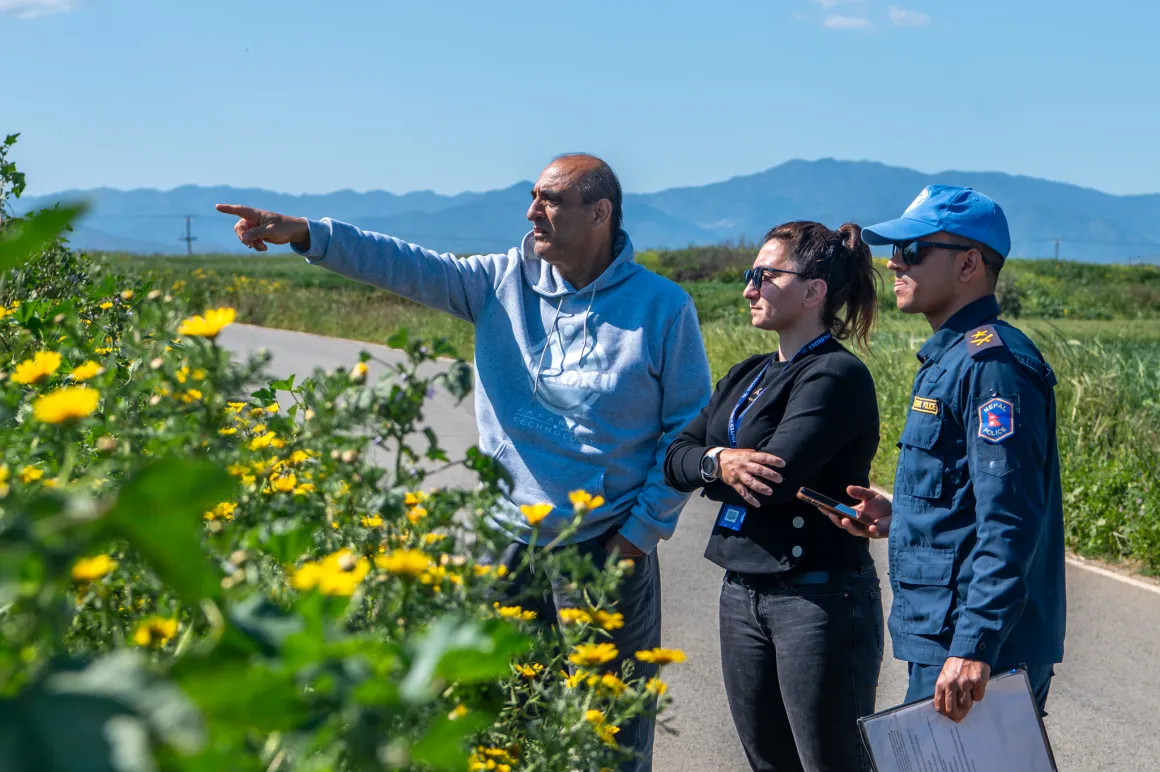
The frontline: Farmers and families
Today, the most critical work happens not in boardrooms, but in the fields. Approximately 3% of the island, some of the most valuable agricultural land, falls within the buffer zone. For local farmers, the buffer zone is not a political border; it is an irrigation ditch or a fence line they must cross to harvest their crops.
However, cultivating near the ceasefire lines is strictly prohibited by UN regulations due to the risk of escalating tensions. This creates a constant tension between the right to livelihood and the need for security.
This is where UNPOL’s community policing model proves vital. It is not enough to simply erect barbed wire. Police officers, in close collaboration with local experts working in the Mission's Civil Affairs section, actively engage with the agricultural community to de-escalate anger before it turns into a violation.
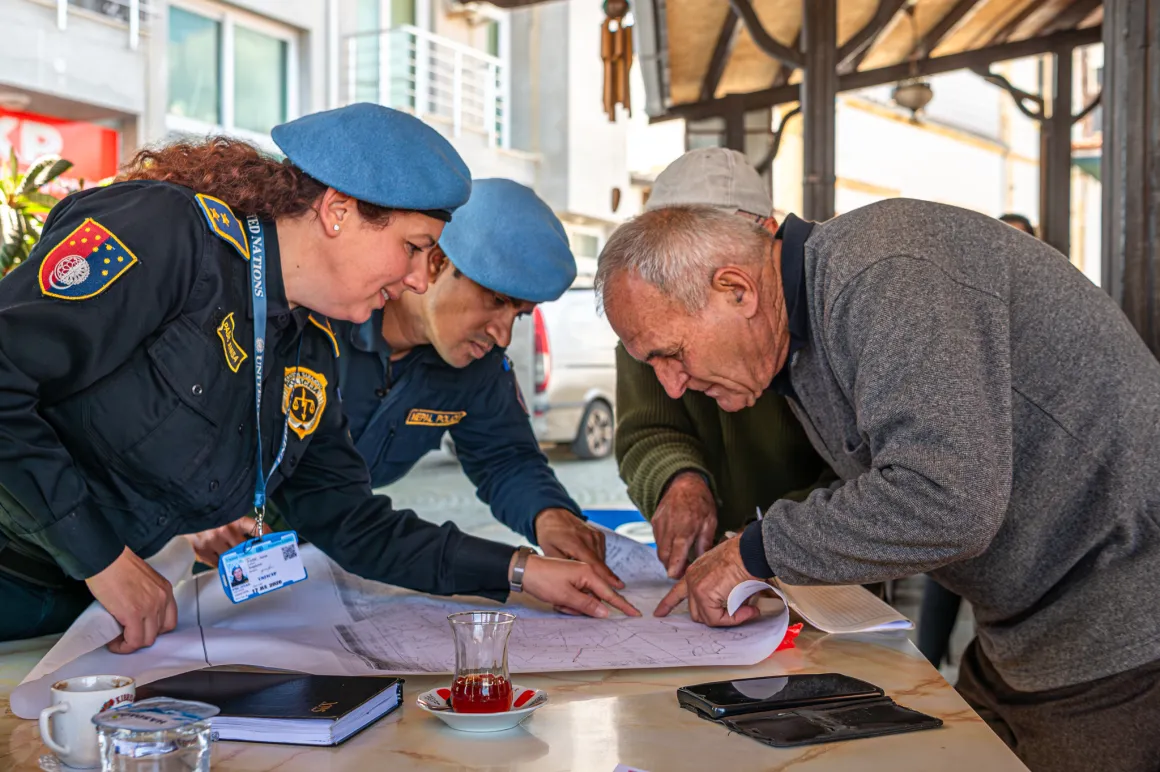
Detective Sergeant Aoife Reilly, an UNPOL officer from Ireland serving with UNFICYP, spends her days navigating these precise tensions. She explains that the key to safety is visibility and familiarity. "When you arrive at a farm gate in the buffer zone, you aren't just an officer enforcing a regulation. You are a guest. If you walk the land, understand the harvest seasons, and listen to their frustrations about water access, then you become a partner. We are here to maintain the status quo, but we do it by ensuring the farmer knows we are keeping them safe, not keeping them out."
Managing access with empathy
The permit system is the lifeblood of civilian life in the buffer zone and led by UNFICYP's Civil Affairs Section. Beyond farmers, the area is home to villagers in places like Pyla/Pile, as well as religious site custodians and construction crews maintaining its infrastructure.
UNFICYP’s role is to be the “middleman.” They liaise among authorities, the Mission's three components (military, police and Civil Affairs) and civilians to ensure that activity inside the buffer zone does not threaten security.
This requires a detective’s eye and a diplomat’s patience. Officers must screen applicants, coordinate with both sides and then physically escort or monitor those activities.
Detective Sergeant Reilly elaborates on the balancing act: "We have to look at every request through two lenses: the legal and the human. The legal lens says, 'no movement near forward defended localities.' But the human lens asks, 'Is this old man trying to fix his water pipe or is he building a military outpost?' Usually, it's the pipe. Community policing means we make that judgment call with our local contacts, building trust so that when we say 'no,' they understand it’s for their own protection."
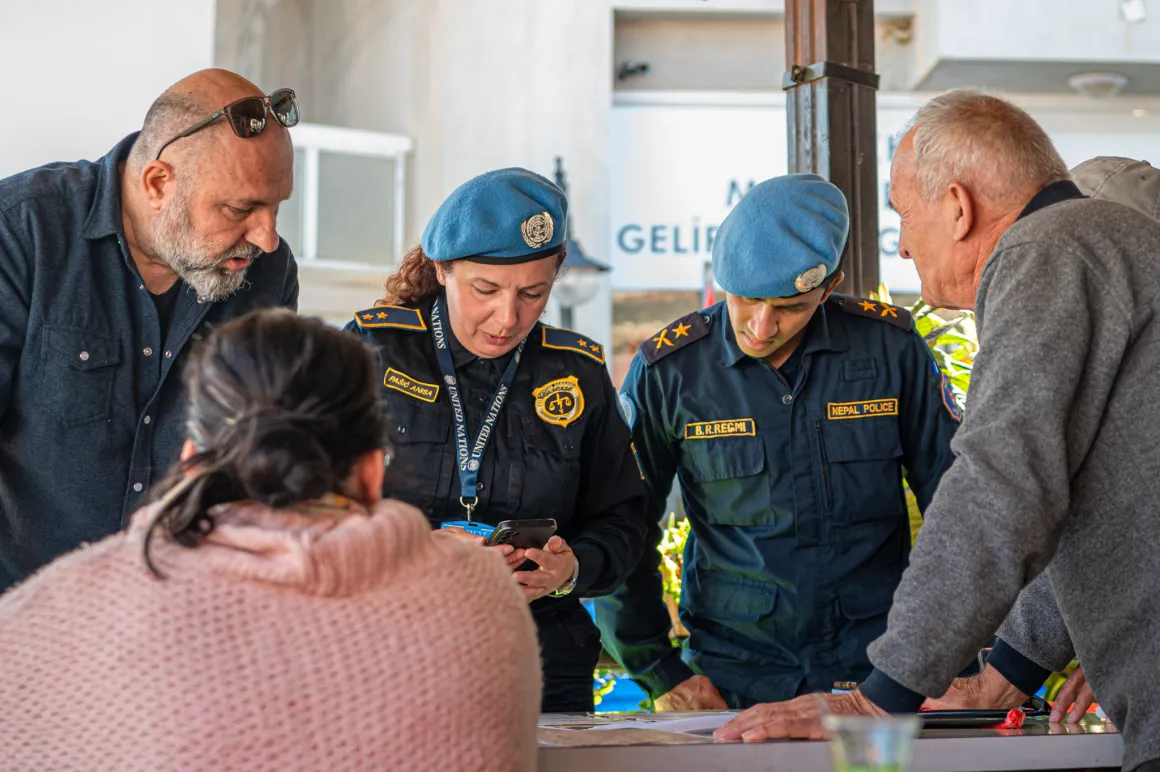
UNPOL and Civil Affairs are on the front line of that effort. By moving from static observation to dynamic engagement, the men and women of the police component prove that peace in Cyprus isn't just maintained by the distance between opposing forces, it is built by the proximity between police and people.


